For students aiming to compete in the SIC team formation process for the Senior Division, assembling a cohesive unit is often more critical than individual trading skill. The Student Investment Challenge (SIC) Senior Division requires teams of 2–4 students who can collaborate across disciplines to produce investment strategy reports and defend them during presentations. As the S16 season progresses toward the Global Station, understanding how to structure your team—and what happens if you need to adjust—is vital for success.
The Core Rule: Stability Over Flexibility
According to recent SIC guidelines, the Senior Division allows teams to be formed across different schools, grades, and regions. This flexibility is an asset, allowing students to find partners with complementary strengths. However, once registered for the Junior/Regional stage, the expectation is that the core team remains intact through to the Global Station. While historical precedents (such as the S15 Global Station) have allowed limited substitutions under strict conditions, relying on late-stage roster changes is risky. It disrupts the collaborative workflow needed for complex tasks like joint report writing and synchronized presentation rehearsals.
Defining Roles Early in SIC Team Formation
A successful SIC team formation strategy begins with role assignment. Teams should not simply divide stocks equally; they must leverage individual expertise. Common effective structures include:
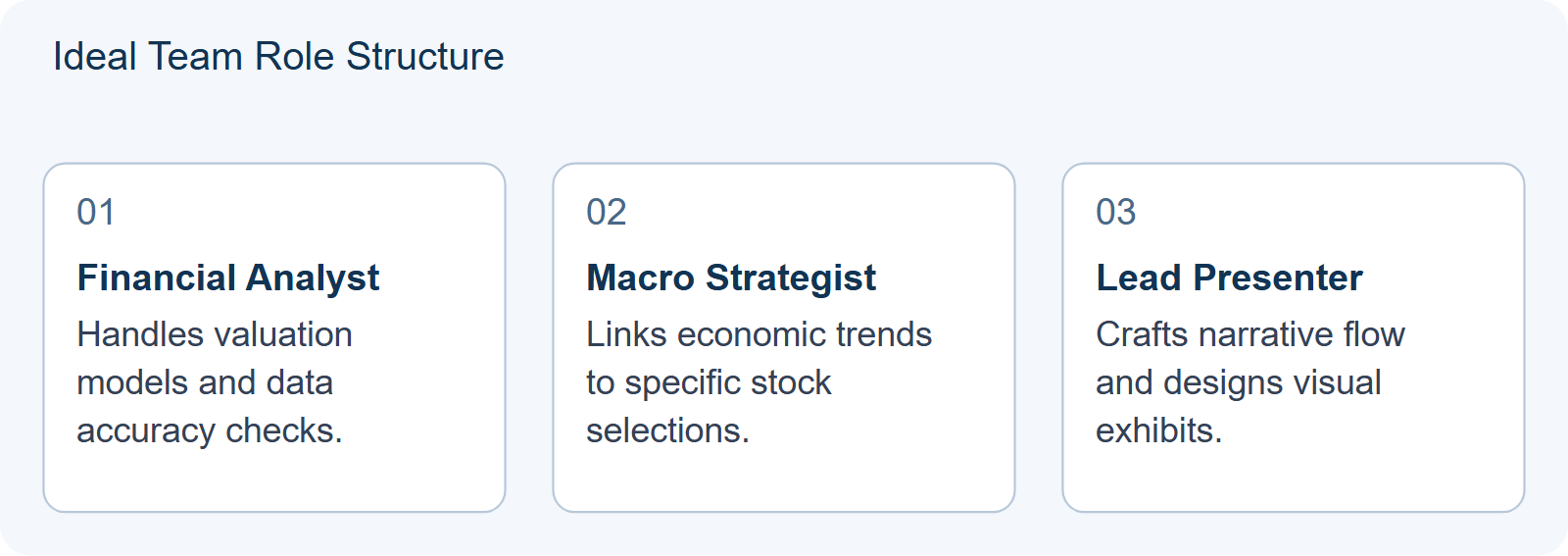
- The Analyst: Focuses on financial modeling, valuation metrics, and data integrity. This student ensures the numbers behind the thesis are robust.
- The Strategist: Connects macro-economic trends with specific stock picks, ensuring the portfolio aligns with the season’s theme (e.g., AI+ESG Investing).
- The Communicator: Leads the narrative arc of the presentation and manages the visual design of slides and reports.
When these roles are clear, the team can operate efficiently even under pressure. If a member struggles with their assigned role, it is better to address this early during the regional phase than to attempt a swap later.
Handling Potential Roster Changes
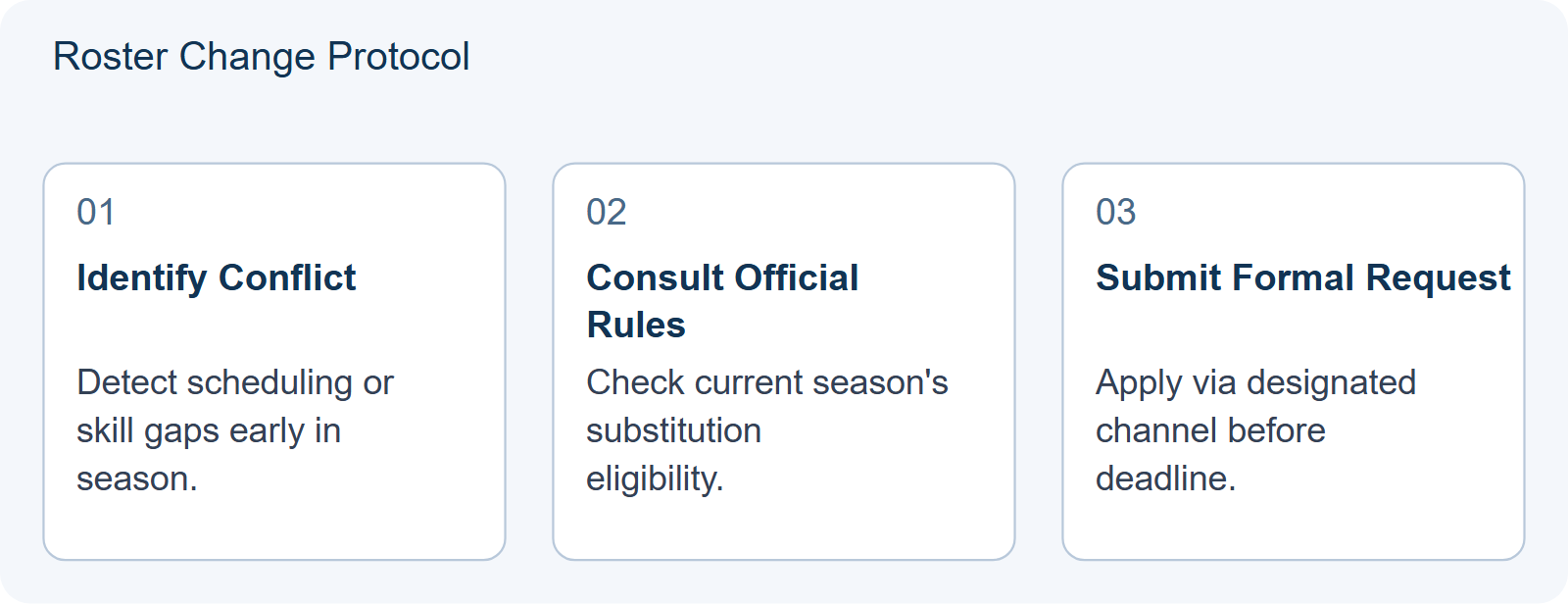
If a change is unavoidable—due to academic conflicts or personal circumstances—students must act quickly. Do not wait until the Global Station registration window closes. Review the specific contest rules for the current season carefully. In previous seasons, substitutions were permitted only for the Global Station phase and required formal applications by designated representatives. This process was not automatic; it required justification and adherence to strict deadlines.
For prospective participants, the best approach is proactive communication. If you anticipate a conflict, discuss it with your team immediately. Consider whether the remaining members can absorb the workload or if a new partner needs to be onboarded during the initial registration period. Late additions often lack the context of earlier decisions, leading to disjointed arguments in the final report.
Preparation Resources for Cohesive Teams
To support strong collaboration, many students utilize external coaching resources. For instance, understanding how to integrate ESG factors into a unified voice is crucial. A well-formed team will agree on how to treat materiality issues, ensuring consistency across all sections of the report. You can explore strategies for this in our guide on ESG in a SIC Thesis.
Additionally, technical alignment is key. Teams should agree on spreadsheet standards early to avoid version control issues. Our article on The Spreadsheet Behind Your SIC Valuation offers tips on maintaining model hygiene when multiple people are editing files.
Conclusion
Effective SIC team formation is about building trust and clarity from day one. While the rules allow for some flexibility, the most successful teams are those that minimize disruption. By defining roles clearly, communicating openly about availability, and preparing for the rigors of the Global Station together, students can present a unified, compelling investment case.
HYPOTHETICAL/ILLUSTRATIVE: The “Mid-Season Analyst Swap” Decision Matrix
To apply the principle of stability over flexibility, consider a hypothetical scenario involving a four-person team preparing for the Global Station. Two months before registration closes, the designated “Analyst”—responsible for financial modeling and data integrity—faces an unavoidable academic conflict that will severely limit their availability during the final report drafting phase. The team must decide between two plausible paths: attempting to onboard a new member or redistributing the workload among the existing three.
Choice A: Onboarding a New Member. This option seems logical on paper because it restores the original headcount and allows the new hire to take over the Analyst role entirely. However, this choice introduces significant friction. The new member lacks context regarding the specific valuation assumptions made in the first half of the season. They would need weeks to understand the portfolio’s history, potentially delaying the integration of ESG factors into the thesis. Furthermore, the remaining members would spend critical time mentoring rather than refining the strategy, risking disjointed arguments in the final presentation.
Choice B: Redistributing Workload Among Existing Members. In this scenario, the departing Analyst remains involved in a limited capacity, perhaps handling only high-level review, while the Strategist and Communicator absorb the technical modeling tasks. The Strategist, who already understands the macro-economic trends, takes ownership of the valuation metrics. The Communicator adjusts the narrative to simplify complex financial jargon, reducing the burden on the non-specialist team members. While this increases individual stress, it preserves institutional memory and ensures the voice of the report remains consistent.
The decision hinges on contextual continuity. If the new member could join immediately with full access to all previous drafts and models, Choice A might work. But in most realistic preparation timelines, the learning curve is too steep. Choice B is superior here because it leverages existing trust and shared knowledge, aligning with the article’s advice to address role struggles early rather than swapping personnel late.
| Factor | Onboarding New Member (Choice A) | Redistributing Workload (Choice B) |
|---|---|---|
| Context Retention | Low; requires extensive briefing | High; leverages existing knowledge |
| Team Cohesion | Risk of fragmented voice | Stronger unified narrative |
| Time Cost | High (training + integration) | Moderate (learning curve for current roles) |
| Risk Level | High (late-stage disruption) | Medium (manageable workload shift) |
Reusable Self-Check: Before making any roster change, ask your team: “Can the remaining members explain our core investment thesis without referencing the departing member’s private notes?” If the answer is no, you are relying too heavily on one person’s siloed knowledge. Instead of swapping people, swap processes: mandate shared documentation standards now so that future changes do not require re-learning the entire project. This proactive step turns a potential crisis into a manageable adjustment, ensuring your team remains cohesive when it matters most.
Frequently Asked Questions
Can I change my SIC team after registering for the Regional Stage?
Generally, teams are expected to remain stable. Substitutions are typically restricted to the Global Station phase and require formal approval based on specific season rules.
Do SIC teams need to be from the same school?
No. The Senior Division explicitly allows teams to form across different schools, grades, and regions, enabling diverse skill sets.
What is the ideal team size for SIC Senior Division?
Teams must consist of 2 to 4 students. Larger teams may face coordination challenges, while smaller teams risk workload overload.