The Student Investment Challenge (SIC) has evolved into a premier platform for high school students to demonstrate financial literacy and strategic thinking. For Season 16 (S16), the SIC Global Station offers participants a choice between online and offline engagement formats. While the Junior Division remains exclusively online, Senior Division teams who qualify for the Global Station must decide how to participate. This decision impacts preparation timelines, resource allocation, and ultimately, how your investment thesis is presented.
Understanding the implications of each format is crucial for prospective students and parents planning their academic extracurriculars. The choice isn’t just about convenience; it reflects your team’s ability to collaborate across distances versus your capacity to engage in immersive, face-to-face networking and presentation dynamics.
Why the Format Choice Matters for S16
The S16 theme, “AI+ESG Investing,” demands sophisticated analysis of environmental, social, and governance factors using artificial intelligence tools. Whether you present this complex strategy online or offline changes the delivery method. In an online setting, clarity of digital slides and concise verbal articulation are paramount. In an offline setting, physical presence, eye contact, and the ability to handle live Q&A with judges in person become differentiators.
According to the official S16 announcement, the Global Station phase runs from December 2026 to February 2027. Teams must weigh their availability during this window against travel requirements if choosing offline participation. Note that specific logistical details such as exact venue locations or fee structures for S16 have not been publicly finalized in the initial announcement, unlike previous seasons. Therefore, decisions should be based on general preparedness rather than assumed fixed costs.
Evaluating Your Team’s Readiness
Before committing to a format, assess your team’s composition. The Senior Division requires 2-4 students who can work collaboratively. If your team members are geographically dispersed, online participation might reduce friction in coordination. However, if your team excels in public speaking and thrives under pressure, the offline format may offer a more engaging experience that mirrors professional fund manager presentations.
| Factor | Online Participation | Offline Participation |
|---|---|---|
| Logistics | No travel required; flexible scheduling within time zones. | Requires travel arrangements; fixed schedule adherence. |
| Presentation Style | Focus on visual aids and clear audio/video quality. | Emphasis on body language and direct judge interaction. |
| Networking | Limited to virtual interactions during sessions. | Opportunity for informal networking with peers and mentors. |
| Preparation Focus | Tech checks, slide design, remote rehearsal. | Travel planning, local accommodation, in-person rehearsals. |
Strategic Preparation Tips
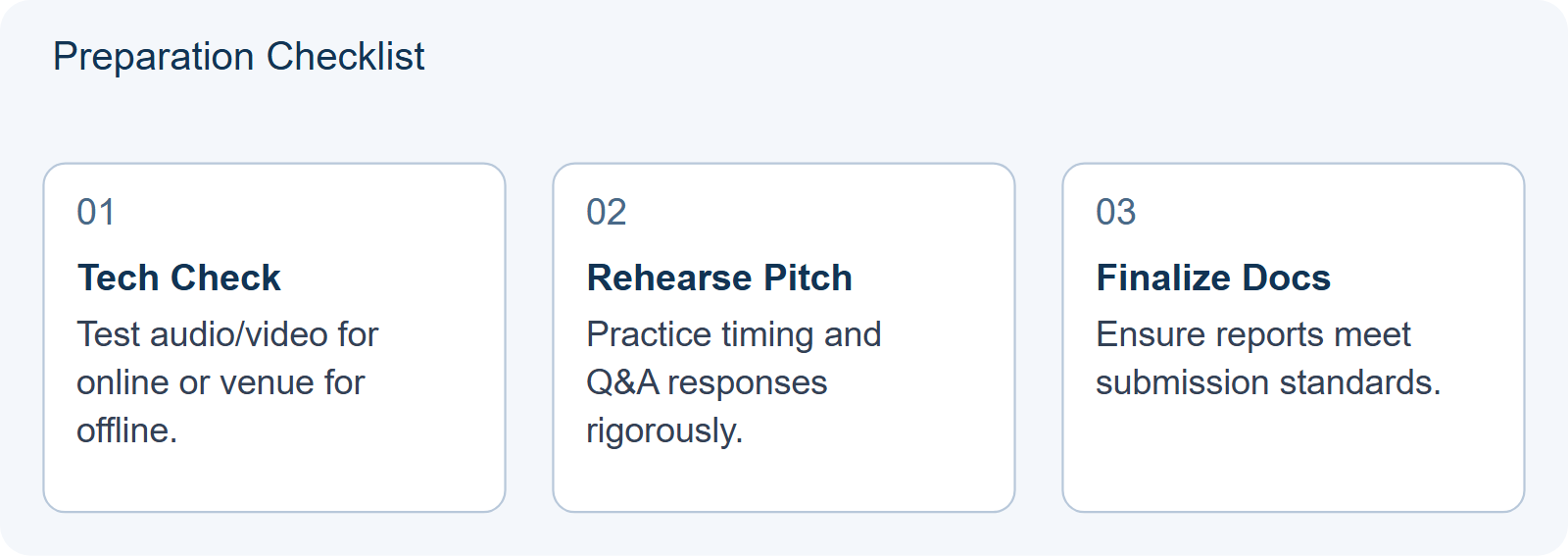
Regardless of the chosen format, the core of success lies in the quality of your investment report and simulation performance. For the ESG in a SIC Thesis, ensure your materiality assessment is robust. Judges look for evidence-based arguments, not checkbox compliance. If you choose online participation, practice your pitch with a timer to ensure you stay within limits, as technical glitches can consume valuable seconds.
For those considering offline participation, prepare for the unpredictability of live environments. Review mid-stage draft reviews to refine your narrative before the final submission. Remember that the transition from regional to global stages often involves stricter scrutiny of your valuation models. Ensure your spreadsheet hygiene is impeccable, as errors in formulas can undermine credibility regardless of delivery format.
Common Misconceptions
A frequent error is assuming that offline participation guarantees higher scores due to personal connection. In reality, scoring rubrics prioritize analytical depth and risk management over presentation flair alone. Conversely, some teams underestimate the technical demands of online submissions, leading to poor audio quality or broken links in reports. Both formats require rigorous testing and rehearsal.
Another misconception is that the format choice affects eligibility. It does not. Eligibility is determined by qualifying through the Regional Stage. The format is simply a mode of delivery for the final round. Students should choose based on what allows them to perform best, not perceived advantages in judging bias.
Conclusion
Choosing between online and offline participation for the SIC Global Station is a strategic decision that aligns with your team’s strengths and constraints. As S16 approaches, keep an eye on official communications for finalized logistical details. By focusing on strong ESG integration and clear communication, you can excel in either format. Start preparing early, leverage available resources, and make the choice that empowers your team to deliver its best work.
HYPOTHETICAL/ILLUSTRATIVE: The ‘Remote Analyst’ vs. ‘Local Presenter’ Scenario
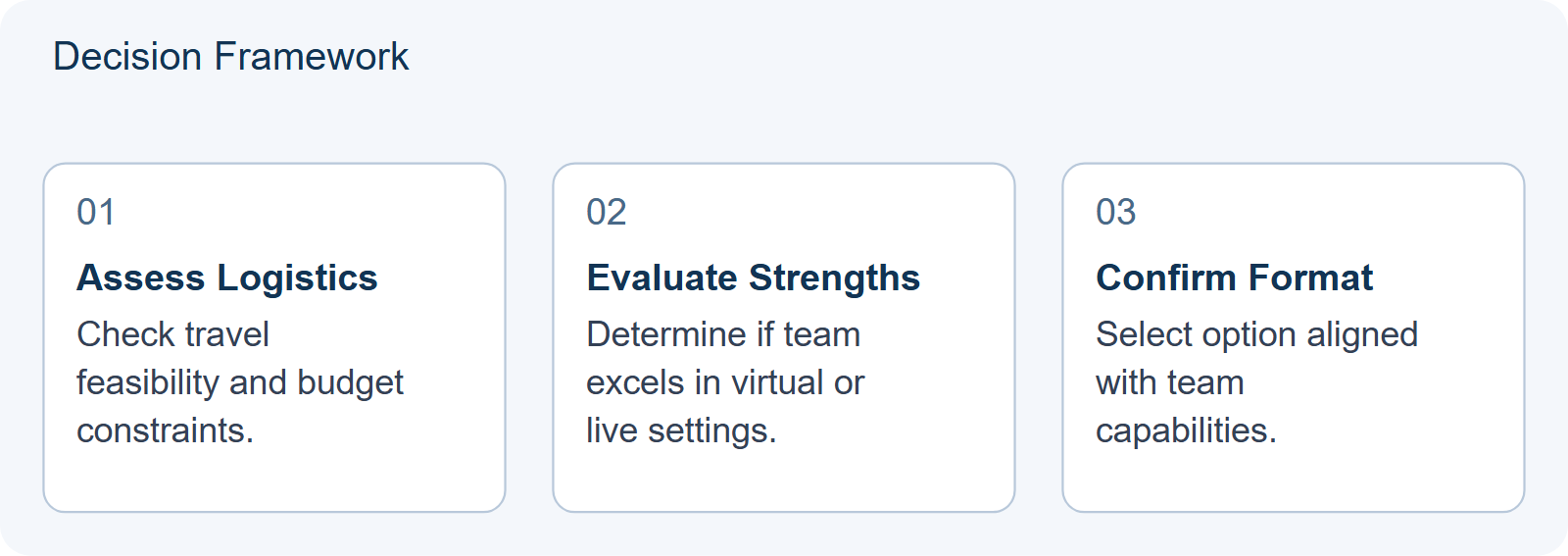
To apply the strategic framework above, consider a hypothetical Senior Division team, “Alpha Fund,” preparing for the Global Station. Their core thesis involves using AI-driven sentiment analysis to evaluate ESG risks in emerging market tech stocks. This complex, data-heavy narrative requires precise delivery. The team faces a critical decision: should they participate online or offline? Let’s compare two plausible preparation paths based on their specific constraints.
Choice A: Online Participation (The Remote Analyst Approach)
Alpha Fund consists of three students living in different time zones within the same country. One member is a coding specialist who struggles with public speaking but excels at building interactive dashboards. If they choose online participation, their preparation focuses on maximizing visual clarity and asynchronous collaboration. They allocate 80% of their rehearsal time to refining slide animations that explain the AI model without overwhelming the judges. They conduct weekly remote mock pitches where one student presents while others provide feedback via chat, simulating the digital environment. The key advantage here is leveraging the coder’s strength; the dashboard becomes the central character of the pitch, reducing the pressure on verbal eloquence. However, the risk lies in technical dependency. A poor internet connection or incompatible file formats could derail their presentation. To mitigate this, they practice uploading large datasets beforehand and prepare a static PDF backup of all dynamic visuals.
Choice B: Offline Participation (The Local Presenter Approach)
Alternatively, if Alpha Fund chooses offline participation, the dynamics shift entirely. The team must coordinate travel, which consumes significant time and energy. The coding specialist, now required to speak in person, faces a steep learning curve. Preparation shifts from slide design to rhetorical structure and body language. They spend hours practicing how to point to physical printouts of their data rather than clicking through slides. The benefit is the ability to read judge reactions in real-time and adjust their tone accordingly. For instance, if judges look confused during the ESG methodology section, the presenter can pause and elaborate immediately—a nuance often lost in online formats due to audio lag. However, the logistical burden may distract from deep analytical refinement. If the team spends too much time planning accommodation, their valuation models might receive less scrutiny.
What Changes the Decision?
The deciding factor is not just geography, but team synergy under pressure. If the team’s strongest asset is their unique visual data representation (the AI dashboard), online participation allows that asset to shine without dilution by travel stress. If their strongest asset is persuasive storytelling and adaptability, offline participation offers a stage to demonstrate those soft skills. In our hypothetical, Alpha Fund realizes their coder cannot deliver a compelling verbal argument alone. Therefore, unless they recruit a fourth member who is an exceptional speaker, the online format—where the coder can support the presenter with live screen sharing—is strategically superior. It plays to their existing strengths rather than forcing them to develop new ones under tight deadlines.
Reusable Self-Check for Your Team
Use this quick diagnostic to validate your choice:
| Diagnostic Question | Lean Toward Online | Lean Toward Offline |
|---|---|---|
| Primary Strength | Data visualization & technical depth | Rhetoric & interpersonal connection |
| Coordination Cost | High travel friction/time zone gaps | Low travel friction/local proximity |
| Risk Tolerance | Can manage tech backups well | Can handle unexpected venue issues |
If you answer “Yes” to more items in the Online column, prioritize digital polish. If “Yes” to the Offline column, invest in live rehearsal. Remember, the goal is to present your best self, not to force a mismatch between your team’s capabilities and the delivery format.
Frequently Asked Questions
Can I switch from online to offline after registering?
Switching tracks typically depends on specific deadlines announced by the organizers. For S16, monitor official channels closely as substitution policies may vary by season.
Does offline participation cost more?
Historically, offline participation involved additional travel and accommodation costs compared to online. Exact fee structures for S16 will be released closer to the event date.
Is the scoring different for online vs offline?
The core evaluation criteria—such as investment strategy, risk management, and presentation clarity—remain consistent. Delivery format affects how these are demonstrated, not the underlying rubric.